Shoreline Pedal Sprint stands out for its clean presentation and thoughtful pacing. The courses mix paved roads with sandy stretches, each demanding different handling approaches. Stunt mechanics add a welcome layer of strategy without distracting from the main checkpoint-collection goal. The timer system keeps runs tense but fair, and the lack of harsh penalties encourages experimentation. While it may not offer deep customization, the core gameplay loop is satisfying and accessible. It is a solid choice for casual racing fans seeking a positive, engaging experience.
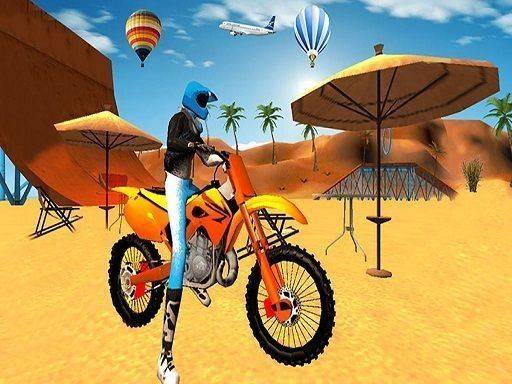
Shoreline Pedal Sprint presents a series of tracks that weave along oceanfront cliffs and across soft sand. Each stage combines paved pathways with loose terrain, requiring riders to adjust their speed and steering. Ramps appear at strategic points, offering opportunities to catch air or maintain momentum. The environment changes subtly between courses, with some featuring tighter turns near rocky outcrops and others opening into long straightaways along the shore. This variety keeps each run feeling distinct.
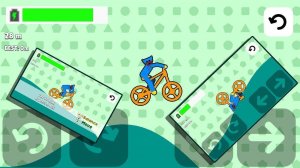
The game uses a straightforward control scheme where players accelerate, brake, and steer using on-screen inputs. Balancing speed is key, as sandy sections demand slower, more careful pedaling to avoid losing control. Paved areas allow for faster travel, but sharp corners require timely braking. The responsiveness of the bicycle feels natural, making it easy to pick up but offering room for improvement in mastering tight drifts and precise jumps.
Performing tricks adds an extra layer of engagement. Players can pull off wheelies or aerial maneuvers when launching off ramps. These stunts contribute to a score multiplier, encouraging risk-taking during runs. However, failed tricks can cause a crash, costing precious seconds. The scoring system rewards consistency and creativity, but the primary objective remains checkpoint collection. This dual focus keeps players weighing the value of each stunt against the ticking clock.
Each level operates under a countdown timer that starts as soon as the race begins. Checkpoints scattered along the route extend the remaining time slightly upon collection. Missing a checkpoint means the timer continues to drain, adding pressure to navigate efficiently. The difficulty curve introduces tighter time limits and more complex obstacle arrangements as players advance. This structure ensures that both speed and route knowledge are equally important for success.
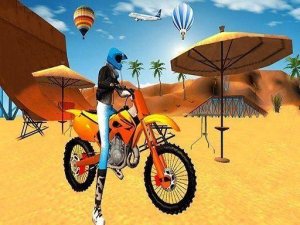
The graphics employ bright, saturated colors that evoke a cheerful seaside setting. Palm trees, rolling waves, and distant cliffs frame the courses. The art style avoids any dark or intense themes, reinforcing the family-friendly tone. Animations are smooth, with the bicycle reacting visibly to different surfaces. The overall presentation feels polished without being overly complex, suitable for casual sessions on a variety of devices.
Repeating levels is encouraged to improve personal bests and learn optimal paths. The game does not punish failure harshly, allowing players to retry as often as they like. This forgiving design helps newcomers build confidence while still challenging experienced players to shave seconds off their times. The stunt system adds a layer of depth for those who want to master both speed and flair, making each replay a chance to refine technique.





Player Comments
Sign in to comment
You must be logged in before posting a review or rating.
No account? Create one
No comments yet. Be the first to comment!