Romantic Evening Styling Game keeps its scope narrow and executes it cleanly. Three scenes, a broad wardrobe of tops, bottoms, dresses, shoes, and accessories, and a breakfast table to arrange give players enough choices to express taste without overwhelming them. Immediate visual feedback makes comparing outfits fast, and self-contained scenes suit short mobile sessions. The trade-off is depth: there is no scoring, competition, or long-term progression, so players seeking goals beyond creative expression may lose interest quickly. It suits younger players and casual fashion fans on phones and tablets.
Romantic Evening Styling Game moves players through three connected vignettes, each with its own dress code. The first is a casual breakfast, where the female character needs a comfortable but charming outfit; once she is dressed, players arrange food and drink on the table to complete the morning mood. The second scene takes place in a gym and requires both characters to wear activewear suited to an energetic workout. The final scene is an evening date, and here each character is dressed separately for a night out. Because every scene is self-contained, players can open the app, finish one look, and leave without tracking progress or remembering where they stopped.
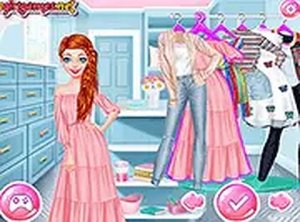
The wardrobe is organized into clear categories rather than a single scrolling list. Tops, bottoms, dresses, shoes, and hairstyles can be mixed and matched for each character, and extra items such as earrings, necklaces, hats, and bags add another layer of personalization. On-screen buttons cycle through options, and each change appears immediately, so comparing two outfits takes seconds. That quick feedback loop is what makes experimentation practical: players can try a dress against a top-and-skirt combination, swap shoes, and adjust accessories until the look fits the occasion. The system rewards trial and error rather than requiring a correct answer.
The breakfast scene adds a non-fashion task. After the outfit is finished, players place plates, cups, and decorative items on the table, choosing from a variety of food and drink options. The mechanic is simple, but it changes the pacing of the scene: instead of only considering how a character looks, players also consider how the table feels. A warm, full arrangement reads differently from a sparse one, and that choice is left to personal taste. It is the clearest example of how the game treats styling as scene-building rather than a single-character dress-up exercise.
Bright colors, a cheerful tone, and touch controls define the experience. Content stays suitable for all ages, with no mature themes and no complex systems to learn. The focus is positive social interaction and creative expression, which makes the game a natural fit for younger players, casual fashion fans, and anyone who wants a low-pressure creative break on a phone or tablet. Its main limitation is depth: the scenes are short and the goals are open-ended, so players looking for scoring, competition, or long-term progression will not find it here.
Sign in to comment
You must be logged in before posting a review or rating.
No comments yet. Be the first to comment!






Editorial Notes